What Is Service Deionization — and Why Do Facilities Use It?
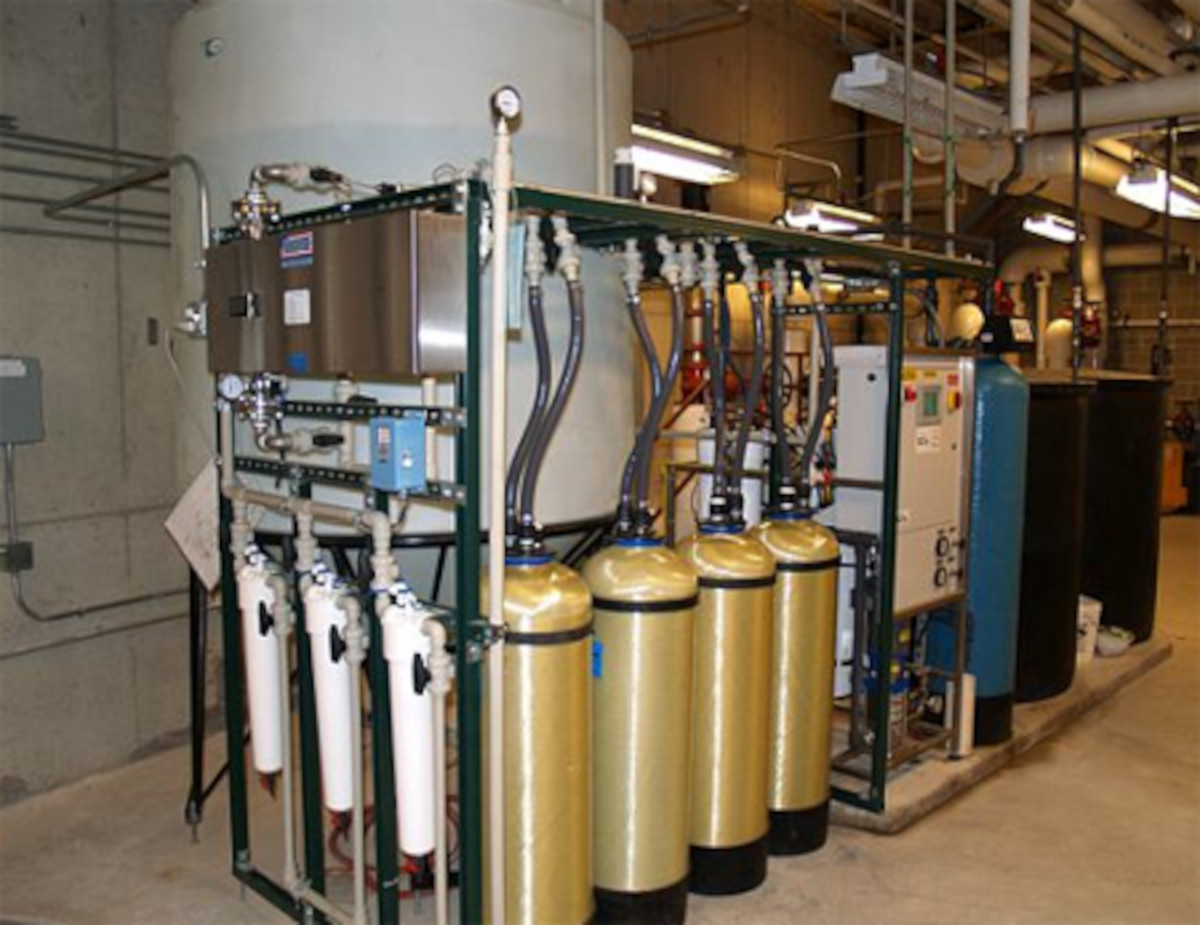
Service deionization (SDI) is a water purification model in which ion exchange resin tanks are exchanged at your facility on a scheduled or as-needed basis. Instead of regenerating resin onsite with hazardous chemicals, spent tanks are swapped for freshly regenerated units and returned to a central facility for offsite processing. For industrial operations in Ohio that require consistent, high-purity water without the overhead of running their own regeneration system, service deionization is often the most practical and cost-effective approach.
Deionized (DI) water has had dissolved ionic contaminants — minerals, salts, metals — removed through ion exchange. Positively charged cations and negatively charged anions are stripped from the water as it passes through resin beds, leaving water that is essentially free of ionic content. The purity of the resulting water is measured in resistivity (megohm-cm) or its inverse, conductivity (microsiemens/cm). Ultrapure water approaches 18.2 MΩ·cm at 25°C — the theoretical maximum for water at that temperature.
Industrial facilities use DI water where mineral contamination would cause product defects, equipment scaling, or process failures. A single batch of tap water used in the wrong application can mean scrapped product, failed QC, or fouled tooling. Getting the water right from the start is cheaper than fixing problems downstream.
Water Purity Grades: Type I, Type II, and Type III DI Water
Not every application requires the same purity level. The ASTM D1193 standard defines four grades of reagent-grade water. In practice, most industrial and laboratory applications fall into one of three categories:
- Type III (General Lab Grade): Resistivity of at least 1 MΩ·cm. Suitable for general glassware rinsing, feed water for Type I or II polishing systems, and many manufacturing wash applications.
- Type II (Analytical Grade): Resistivity of at least 1 MΩ·cm with tighter controls on organic content and bacteria. Used in analytical instruments, buffer preparation, and microbiological media.
- Type I (Ultrapure): Resistivity at or near 18.2 MΩ·cm. Required for HPLC, cell culture, semiconductor fabrication, and precision electronics manufacturing.
Matching the correct purity grade to your process is not just about performance — it directly affects operating cost. Running a Type I system for an application that only needs Type III water wastes resin capacity and increases exchange frequency. EH2O’s engineering team evaluates each facility’s actual process requirements before recommending a system configuration.
SDI Tank Types: Mixed Bed, Semiconductor Grade, and Color-Indicating Resin
The resin inside a DI tank determines both the purity ceiling and the useful service life between exchanges. EH2O configures tanks based on incoming water chemistry and target effluent quality.
- Standard Mixed Bed: A blend of cation and anion resin in a single vessel. The most common configuration for general industrial and laboratory DI.
- Semiconductor Grade: High-capacity, high-purity resin designed for electronics and precision manufacturing. Often paired with upstream RO pretreatment.
- Color-Indicating Resin: Mixed bed resin that changes color as it approaches exhaustion, giving operators a visual cue without requiring continuous resistivity monitoring.
For high-volume facilities, two-bed systems using separate cation and anion vessels upstream of a mixed-bed polisher can extend service life significantly. Contact us to discuss the right configuration for your facility.
The Role of RO Pretreatment in Service Deionization
Ohio municipal water — particularly in Cleveland and the broader Lake Erie watershed — carries meaningful dissolved solids loads. Running hard, high-TDS water directly through DI resin burns through capacity quickly and drives up exchange frequency and cost. Reverse osmosis pretreatment removes 90–99% of dissolved solids before water reaches the DI system, dramatically extending resin service life.
In a properly engineered RO + DI system, the RO unit handles bulk removal and the DI polisher handles final ionic reduction. The American Water Works Association consistently recommends this two-stage approach for facilities with higher purity targets.
EH2O designs and services both components. See our industrial RO systems and RO membrane cleaning service for more detail.
SDI vs. PEDI vs. DI Cartridges: Choosing the Right Service Model
Service deionization comes in a few different delivery formats. Understanding the distinctions helps facilities match the model to their actual usage pattern.
- Service DI (SDI) / Tank Exchange: Full-size resin tanks (typically 1–6 cubic feet of resin) are exchanged on a scheduled or on-call basis. Best for facilities with continuous or high-volume DI demand. The most economical per-gallon cost at scale.
- Portable Exchange DI (PEDI): Smaller, portable exchange vessels that a technician brings to the facility and connects directly to the water line. Common in pharmaceutical and laboratory environments where validated connections and controlled handling are required.
- DI Cartridges: Point-of-use cartridge-style polishers for very low-volume or bench-top applications. Appropriate for single instruments or small lab stations. Higher per-gallon cost but minimal infrastructure.
For most industrial facilities — manufacturers, food processors, metal finishers — full-size SDI tank exchange delivers the best combination of capacity, cost, and simplicity. EH2O operates a regional fleet in Ohio that supports fast, reliable exchanges without long lead times.
Industries That Rely on Deionized Water Systems in Ohio
High-purity water requirements cut across a wide range of industrial sectors. EH2O serves facilities throughout Ohio with service deionization programs tailored to the specific demands of each industry.
- Pharmaceutical and Biotech: USP Purified Water and Water for Injection standards require validated, consistently high-purity feed water. DI exchange programs integrate with quality management systems and batch documentation requirements.
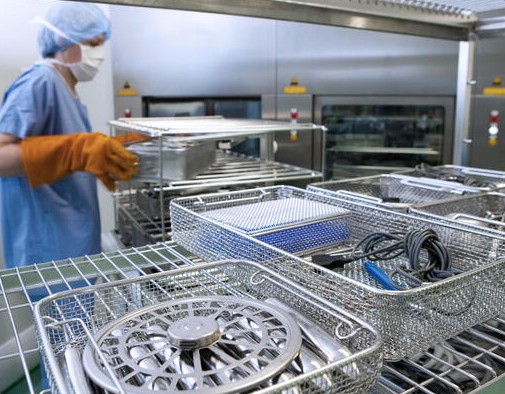
- Medical Device Manufacturing: Final rinse water for medical-grade components must meet strict ionic cleanliness specifications. A single contaminated rinse can cause a failed validation or device recall.
- Electronics and Semiconductor: Cleaning and rinsing of circuit boards, wafers, and precision components requires ultrapure water. Ionic contamination causes corrosion, shorts, and yield loss.
- Laboratories and Testing Facilities: Analytical instruments including ICP-MS, HPLC, and TOC analyzers require high-purity feed water to maintain calibration and accuracy.
- Food and Beverage Processing: DI water is used in ingredient water, equipment sanitizing rinses, and boiler feed where scale control and product consistency are priorities.
- Metal Finishing and Plating: Rinse stages in electroplating and anodizing lines require DI water to prevent spotting, staining, and bath contamination from mineral carryover.
- General Industrial Manufacturing: Parts washing, coating, and precision cleaning operations benefit from DI water where mineral deposits or spotting would affect finish quality or dimensional tolerances.
- Automotive and Aerospace: Final wash and rinse stages in precision machining and component assembly require DI water to prevent corrosion and coating adhesion problems.
EH2O’s DI Tank Exchange Process — How It Works
EH2O’s service deionization program is built around reliable scheduling and direct technician relationships. Here’s how the exchange process works from start to finish.
- Initial Site Assessment: We evaluate your incoming water chemistry, flow rate requirements, point-of-use specifications, and available space before recommending a system configuration.
- System Installation: EH2O installs the appropriate vessel manifold, connections, and monitoring equipment at your facility.
- Scheduled or On-Call Exchanges: Spent tanks are swapped for freshly regenerated units on a schedule matched to your consumption — or on demand when resistivity begins to drop.
- Offsite Regeneration: Collected tanks return to the regeneration facility where resin is chemically regenerated with acid and caustic, rinsed, and quality-tested before being returned to service.
- Ongoing Monitoring and Support: EH2O technicians track performance data, flag trend changes, and adjust exchange frequency as your production demands shift.
Facilities with preventative maintenance contracts receive priority scheduling and proactive service visits. If you also have softeners in your pretreatment chain, EH2O services those too — see our commercial and industrial water softener services.
Frequently Asked Questions About Service Deionization
What areas in Ohio does EH2O serve for DI tank exchange?
EH2O’s regional fleet services industrial and commercial facilities across Ohio, with primary coverage in Cleveland, Columbus, Akron, Toledo, and surrounding metro areas. If you are outside these core markets, contact us directly — we evaluate service feasibility for facilities outside our standard coverage zone on a case-by-case basis.
What happens if our DI tank exhausts unexpectedly outside of business hours?
EH2O provides 24/7 support including emergency response for unplanned exhaustion events. Production-critical facilities that cannot afford DI water interruptions should discuss our emergency exchange protocols when setting up service. Preventative maintenance contracts include proactive monitoring to reduce the likelihood of unplanned exhaustion.
How do we know what size DI system our facility needs?
System sizing depends on three main factors: incoming water TDS, daily DI water consumption (gallons per day or gallons per batch cycle), and target effluent resistivity. EH2O conducts an on-site water analysis and reviews your process requirements before recommending vessel count, resin type, and exchange frequency. There is no generic answer — a semiconductor rinse operation and a food processing line have very different sizing profiles even at the same daily flow rate.
Do you offer service contracts, or is this strictly on a per-exchange basis?
EH2O offers both. Facilities with predictable DI consumption typically benefit from structured service agreements that lock in exchange schedules and priority response. On-call exchange is available for lower-volume or irregular-use applications. Contract terms are flexible and built around your actual usage patterns rather than a fixed schedule that does not match your operation.
Can EH2O service DI equipment that was installed by another vendor?
In most cases, yes. EH2O technicians work with standard vessel configurations common across the industry. If your existing manifold and connections are compatible with our exchange program, we can typically take over service without requiring a full system replacement. Contact us with your current equipment details and we will assess compatibility before committing you to anything.
Request a DI Tank Exchange Assessment for Your Ohio Facility
If your facility depends on high-purity water and you’re evaluating service deionization options in Ohio, EH2O Solutions can assess your current setup and recommend the right configuration. We work directly with your engineering and operations teams — no call centers, no hand-offs to regional distributors.
Call us at (216) 346-0919 to speak with a technician, or submit a request online and we will follow up to schedule a free on-site assessment at your Cleveland-area or Ohio facility.